Kaikeyi by Vaishnavi Patel: a review
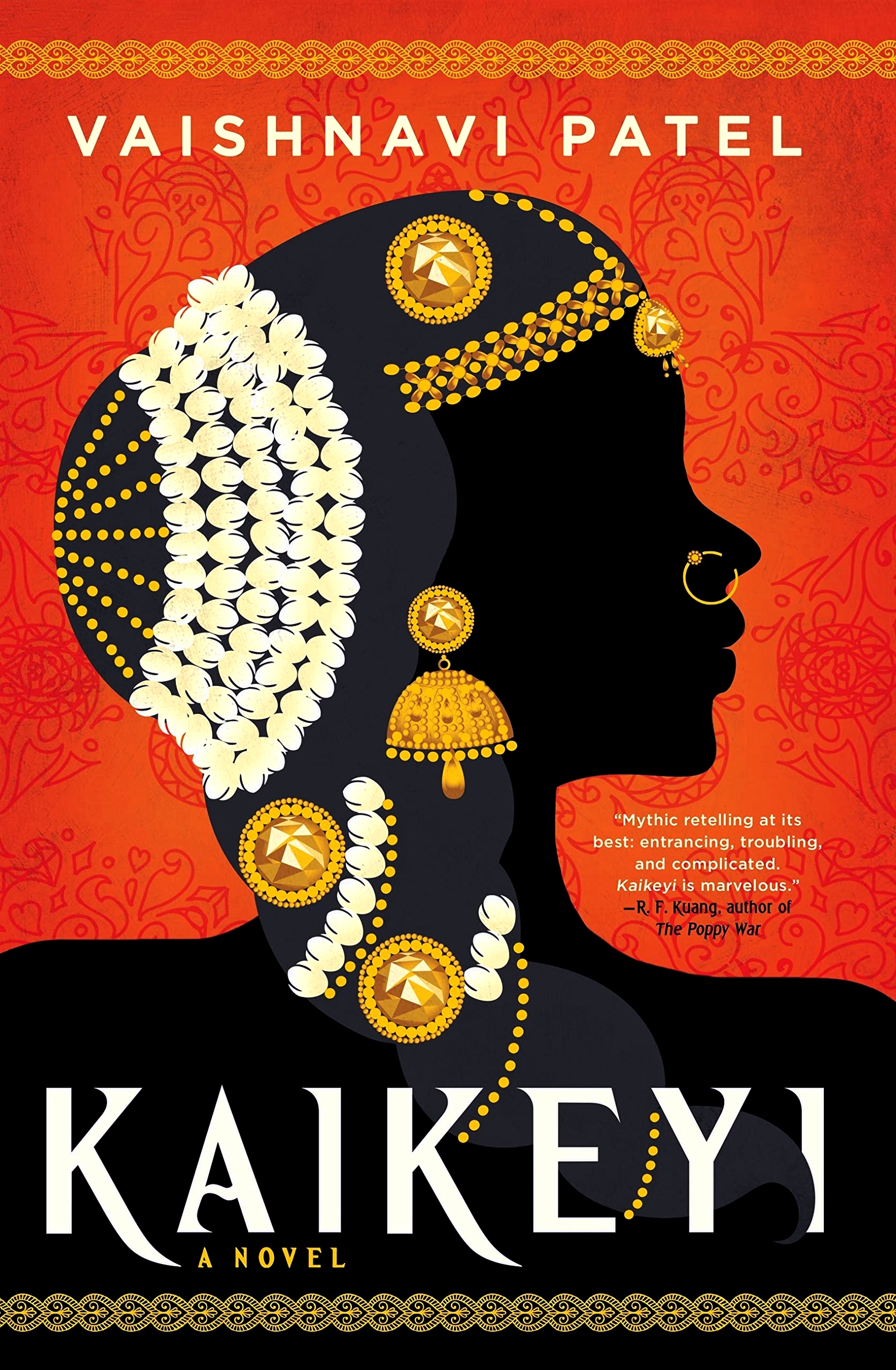

I went into this book only knowing Kaikeyi as "that queen from the Ramayana who caused a whole mess," and I came out completely rearranging my mental furniture about her. The book opens with a line that immediately sets the tone for the whole ride: "I was born on the full moon under an auspicious constellation, the holiest of positions—much good it did me." That little bit of dry wit tucked right up against cosmic significance tells you exactly who you're dealing with — a woman who's been handed all the trappings of importance and none of the actual power, and who is very aware of the irony. From there, Patel takes us through Kaikeyi's whole life — an overlooked princess, a banished mother, a library full of scrolls that somehow become the key to real agency — and it's just a joy to watch someone go from "the girl nobody wanted to marry off fast enough" to "the most formidable queen in the room."

What really makes this book sing is how much Patel lets Kaikeyi be capable without ever losing her humanity. The magic system, this idea of the Binding Plane where Kaikeyi can literally see and pull on the threads connecting people, is such a clever metaphor for what she's doing throughout the whole book — quietly, persistently rewiring the relationships around her because the direct paths to power are closed off to her. And her relationships are the real heart of it: her twin brother teaching her to fight, her maid Manthara showing her what the world actually does to women without status, her bond with her fellow queens built on solidarity instead of rivalry. There's a moment where Kaikeyi reflects on the burden of trying to do right, noting "those who are good question themselves. Because those who are good always wonder if there was a better way, a way that could have helped more and hurt less," and that line just lodged itself in my chest — it's such a quiet, devastating way of explaining why the "villain" of the story might actually be the one who cared the most.

I'll say this too — I finished the book feeling genuinely wrung out in the best way, the kind of ache you get from watching someone fight so hard for a better world only to be flattened by forces bigger than her. Patel's prose has this lovely balance of lush and propulsive, so even during the slower stretches early on, I never wanted to put it down. If you love myth retellings that hand the microphone to the woman history decided to villainize, or if you just want to read about a heroine who is stubborn, flawed, ferociously loving, and impossible not to root for, this one is absolutely worth your time — just go in knowing it's telling its own story, a bold "what if," rather than a strict retread of the original epic, and you'll have a wonderful time with it.
