Fool's Errand by Robin Hobb: a review
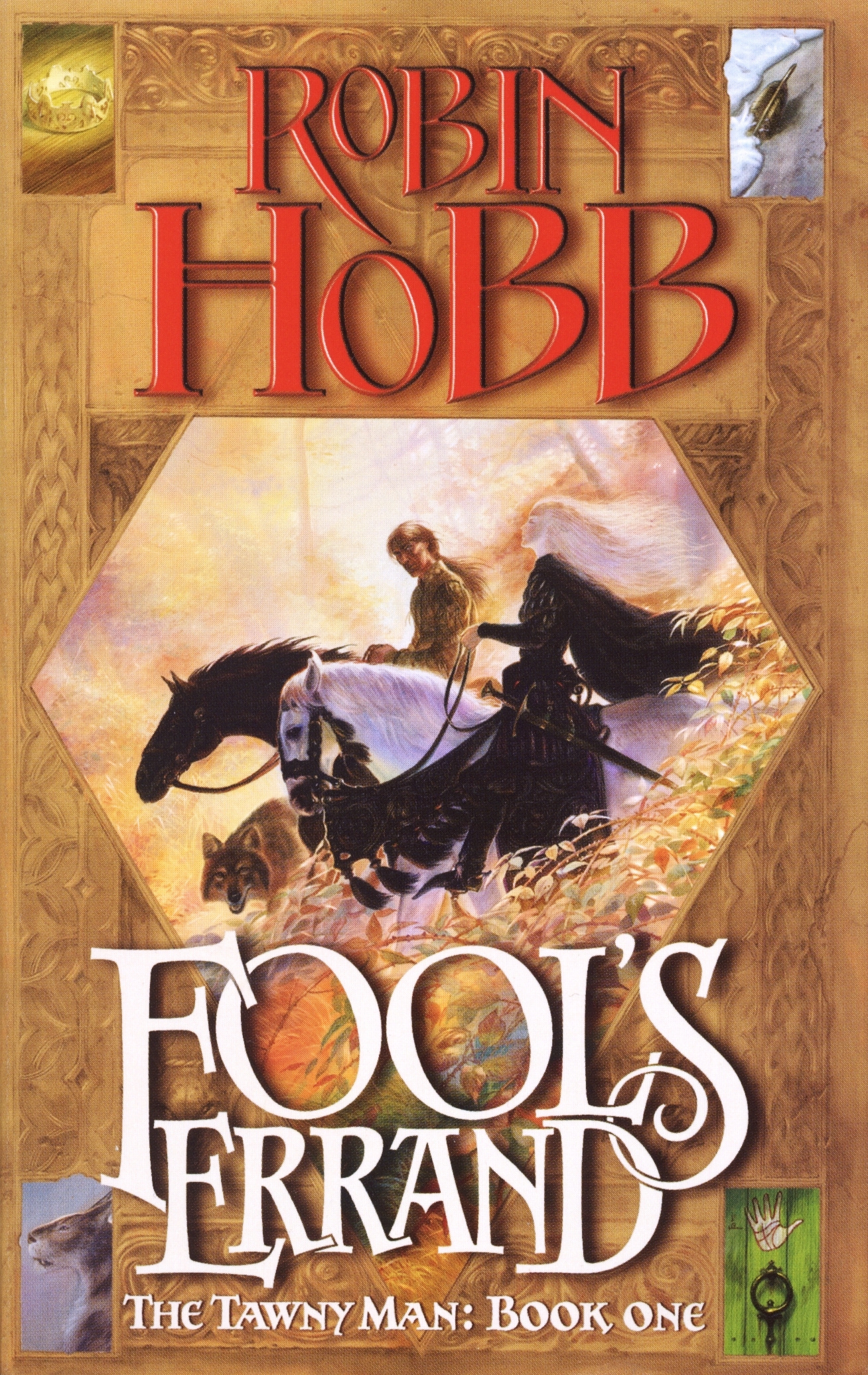

Coming back to Fitz after everything he went through in the Farseer trilogy felt a bit like checking in on an old friend who swore he was doing fine and definitely was not doing fine. Fifteen years have passed, our boy is now going by "Tom Badgerlock" (subtle, Fitz, very subtle), and he's living the dream: a cottage, some chickens, his beloved wolf Nighteyes, and a self-imposed exile from literally everyone who could hurt him again. Of course, peace never lasts in this world, and soon his past comes knocking in the form of Chade, and then the Fool, and then a missing prince who needs finding before his own wedding. It should feel like a slow burn — honestly, the first chunk of the book basically is Fitz puttering around his farm reminiscing — but somehow Hobb makes even the quiet chapters feel essential, like you're settling back into a couch that missed you.

What really got me, though, is how much this book is a masterclass in earning your emotional gut-punches. Hobb doesn't rely on constant action; she just sits you down with characters so achingly real that when things go sideways, it actually hurts. There's this lovely, weary bit of wisdom early on — "Stop longing. You poison today's ease, reaching always for tomorrow" — that basically sums up Fitz's entire personality and, frankly, felt like a personal callout. And then there's the reunion with the Fool, who shows up as the flamboyant "Lord Golden" and somehow makes even the driest banter feel like a love letter. Their friendship is the beating heart of this book, all barbed affection and unspoken devotion, the kind of bond where you just know one of them is eventually going to wreck the other's life a little bit, and you'll thank them for it anyway.

And can we talk about the Wit and the wolf bond for a second, because it's genuinely one of the most tender pieces of fantasy worldbuilding I've come across. Fitz and Nighteyes aren't just a man and his animal companion, they're two creatures who've folded into each other after years of closeness, and Hobb captures that with lines like "The past is no further away than the last breath you took," which somehow applies to literally every relationship in this book. This isn't a fast read, and if you're craving nonstop battles you might get a little restless in the early chapters, but if you love character work so rich it makes you forget you're reading fiction, this is exactly your book. I closed it feeling wrecked in the best way, immediately wanting to know what fresh heartbreak Hobb has cooked up next, and honestly, isn't that the highest compliment you can pay a book?
